Role: Head of Product Design (Experience) @Position Green
Company Stage: Scale-up
Company Space: B2B, ESG Management/Sustainability
Products: 2 product lines
Team: 6-10, EPIC team (Experience designers, Design System Designers, UX researchers, UX writers)
The Moment
Position Green was evolving fast, backed by new investment, a new product organization started to take shape and the company had limited experience integrating and working with design. This created a unique opportunity to:
Build and set direction for an embedded product experience organization
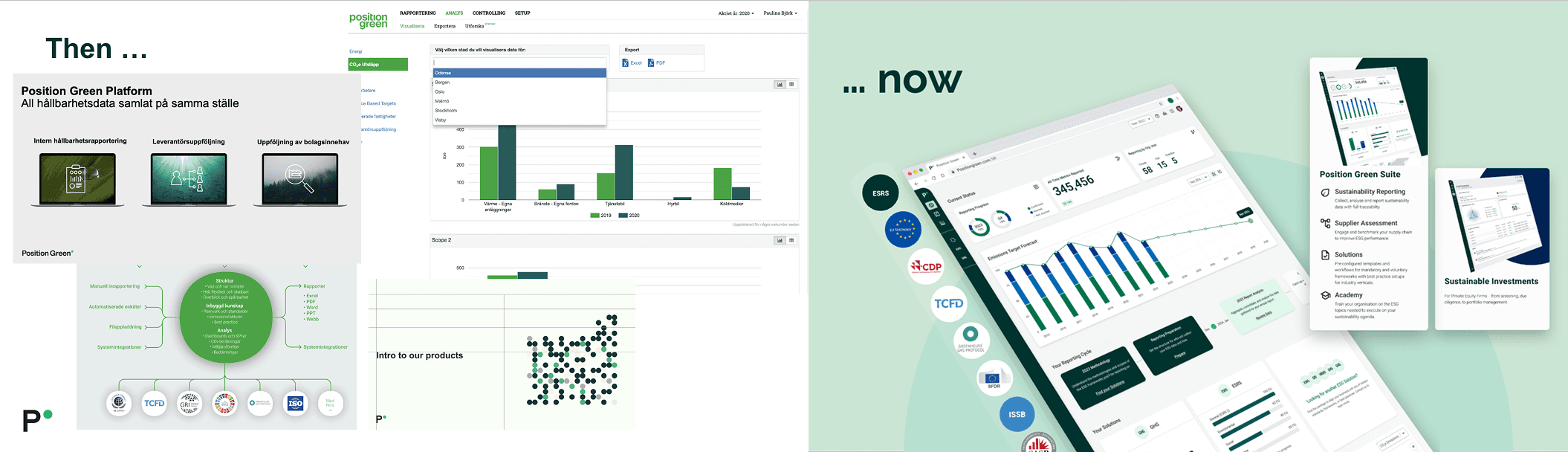
Refresh the products and their story to better match customer and user expectations, building trust
Unify tools, principles, and language so teams could operate with the same understanding
They were growing but not yet growing together.
The challenge was bigger than design. It was about foundations, identity, and alignment
The Vision: One Experience, One Story
The fragmentation and silos were perceivable. My vision was making good design the bridge between silos making the CX/UX agnostic of those internal structures. That does not mean designers were the ones delivering that good experience, that meant creating the tools, relationships and principles to build: 1 F-ing experience
A shared ambition to deliver familiarity, trust, and simplicity across every touchpoint. From website, to sales meetings, to consultancy materials, to products and upgrades/ upsells.
The key principles that guided what a “good” experience meant:
It looks good → someone took the time and cared → trust
It works well → it fulfills expectations clearly → retention
It’s PG → it feels like us → differentiation
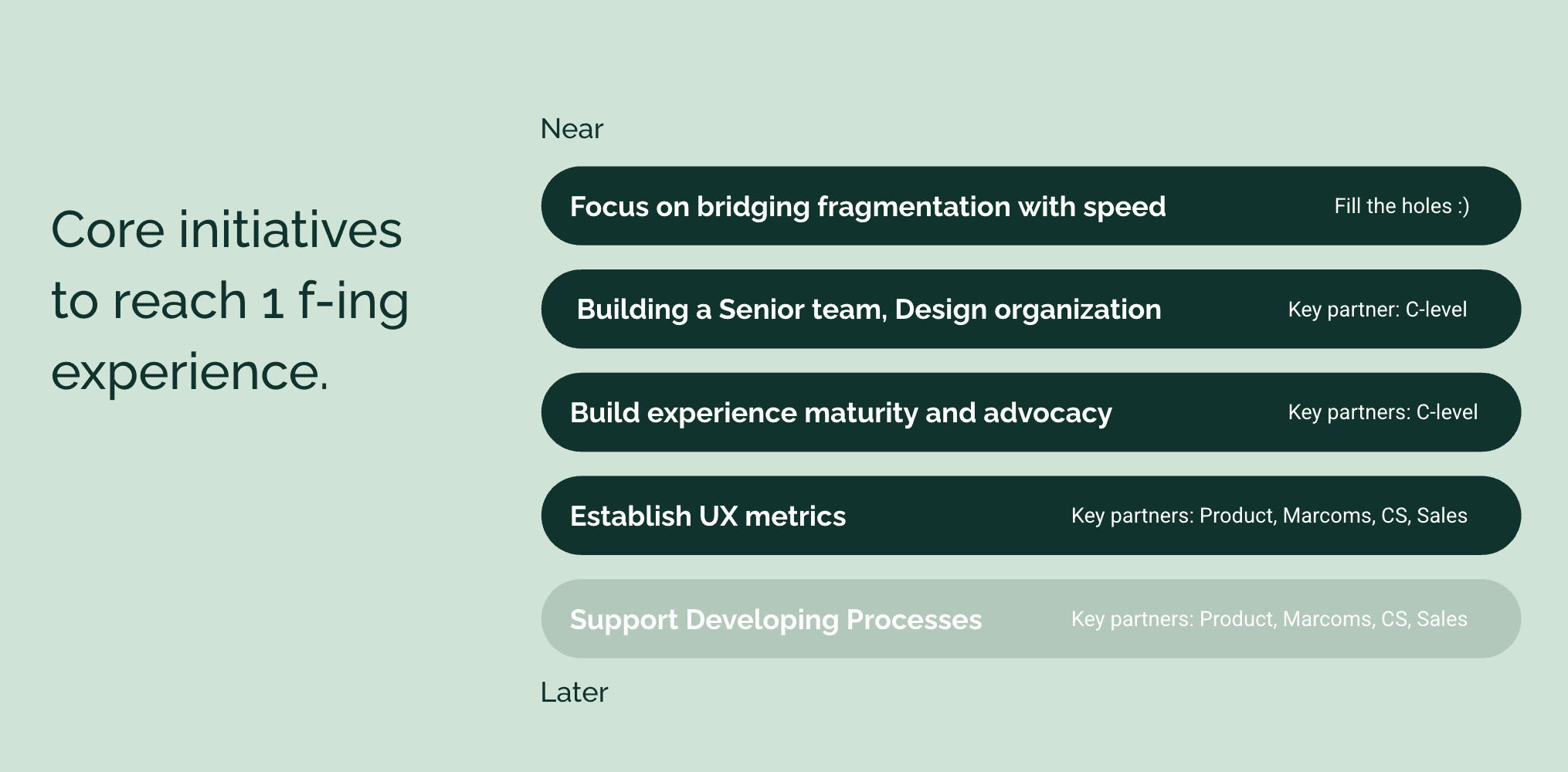
Building the EPIC Design Organization
A big initiative towards that vision was establishing an organizational model for design: the EPIC team. I loved to say I had an EPIC team, they were epic.
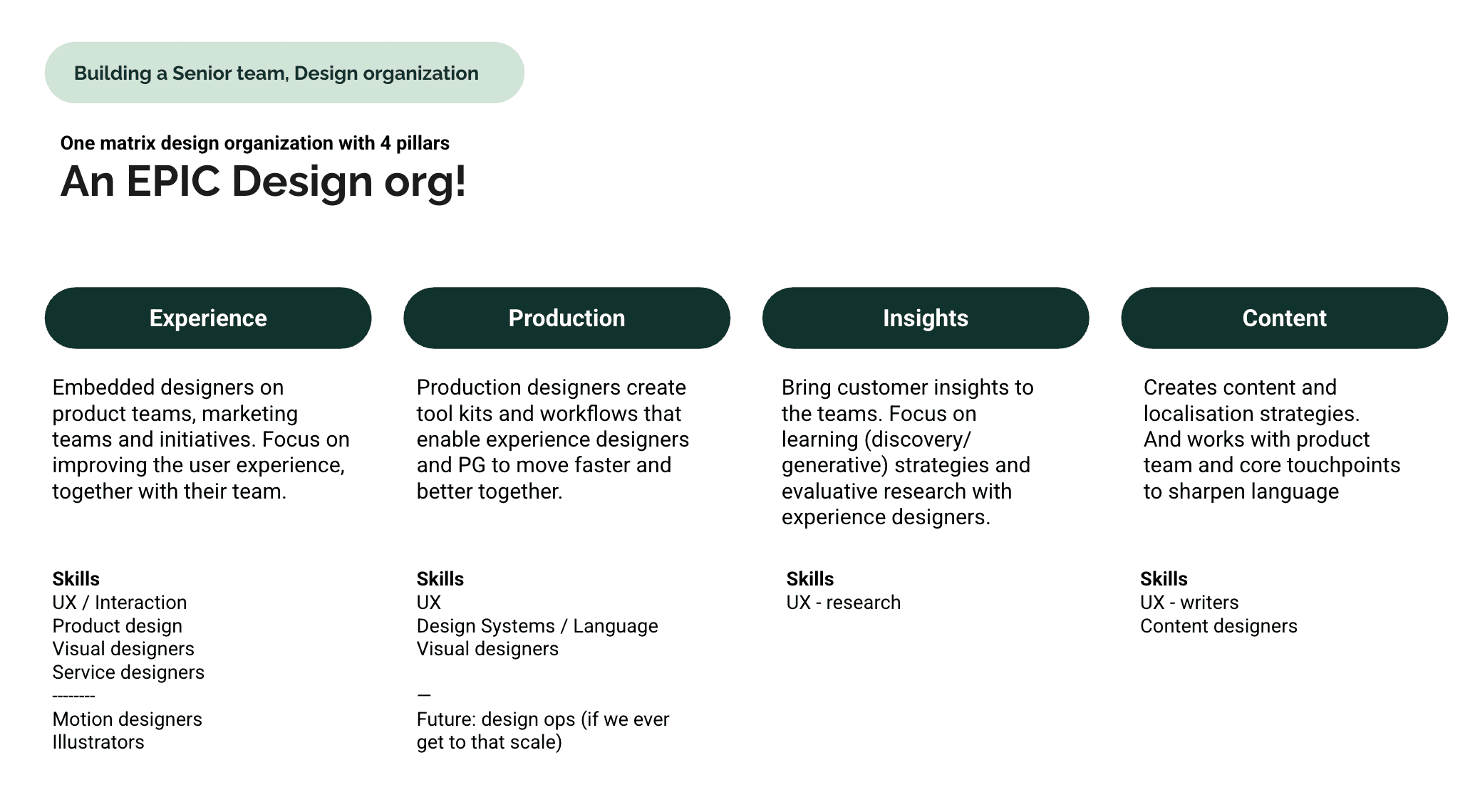
This structure created a matrix bridge between Product, Marketing, Operations and Advisory, connecting people who had never collaborated systematically before. Having specific partner functions towards an Unified experience.
Laying the Foundations
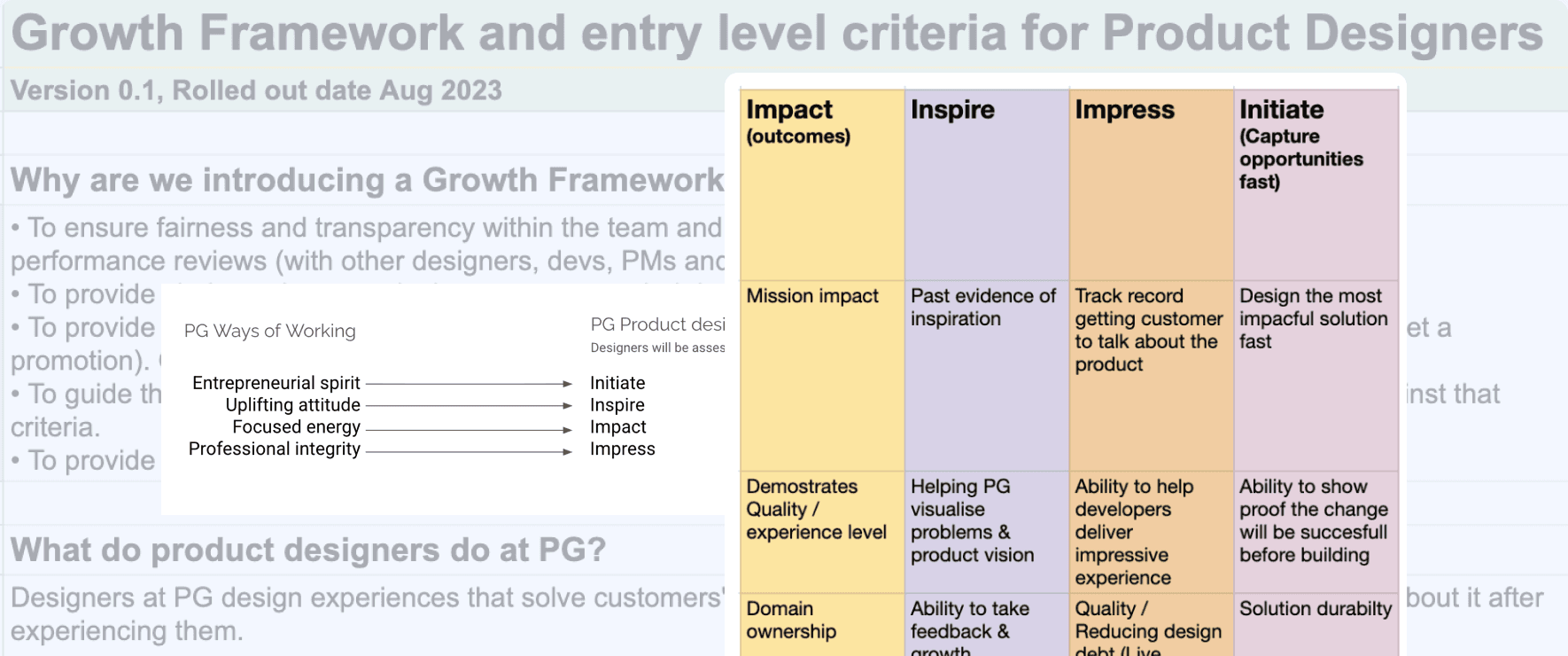
To set the organization up for success, we needed clarity and consistency. I introduced a growth framework for product experience, designed to:
Ensure fairness and transparency in evaluations
Provide clear growth paths and expectations at every level
Guide hiring decisions to increase talent density and diversity
Communicate what the function does and why it matters to the rest of the business
This framework became the backbone for performance, culture, and credibility.
From Ambition to Action
We turned our strategy into concrete initiatives:
Repositioned and Refreshed our products around clear and evidence based ICPs and user archetypes
Refreshed all major assets, from sales decks and onboarding flows to the company website
Launched an Insights Hub to centralize knowledge and empower self-serve discovery
Standardized design tools and language, reducing fragmentation
Embedded early validation practices across product teams
The outcome: Teams began to see, speak, and build the same story.
Measuring Impact
Established clear growth and compensation frameworks
Cut time-to-value by enabling faster collaboration between Product, MarComs, and Operations
Started to anchored design as a business enabler, not a service function
Reduced localization costs by setting style guides, training workshops for decentralized product copy delivery, and improve clarity for translations. A Small changes. Big business impact.
What I Learned
Leadership is connection, not only direction.
Confidence comes from clarity
Culture is built through everyday behaviors
Trust creates autonomy
Growth requires letting go
I stepped in to build the foundation and stepped back when the team no longer needed me to hold it.
Impact
Dimension | Before | After |
|---|---|---|
Product Experience Org | Fragmented and reactive | EPIC model with clear pillars and leadership |
Product Story | Inconsistent and siloed | Unified narrative and New products tied to ICPs and User Archetypes |
Tools & Processes | Scattered and manual | Integrated Design tools, Centralized Insight Hub, shared language |
UX Language | Incoherent across products | Clear, Consistent, cost-saving system |
Visual Language | Build for Print | New brand book, Clear guidelines, Refreshed iconic elements and colors |
Team Culture | Unclear roles & growth | Transparent framework and shared values |